01 / Video
Remote video monitoring
Someone watching your existing cameras live during the hours nobody is on site.
View details
Guide
No single service covers every hour well. Layered together, they cover each other’s gaps.
Request a quoteCall (831) 574-6164
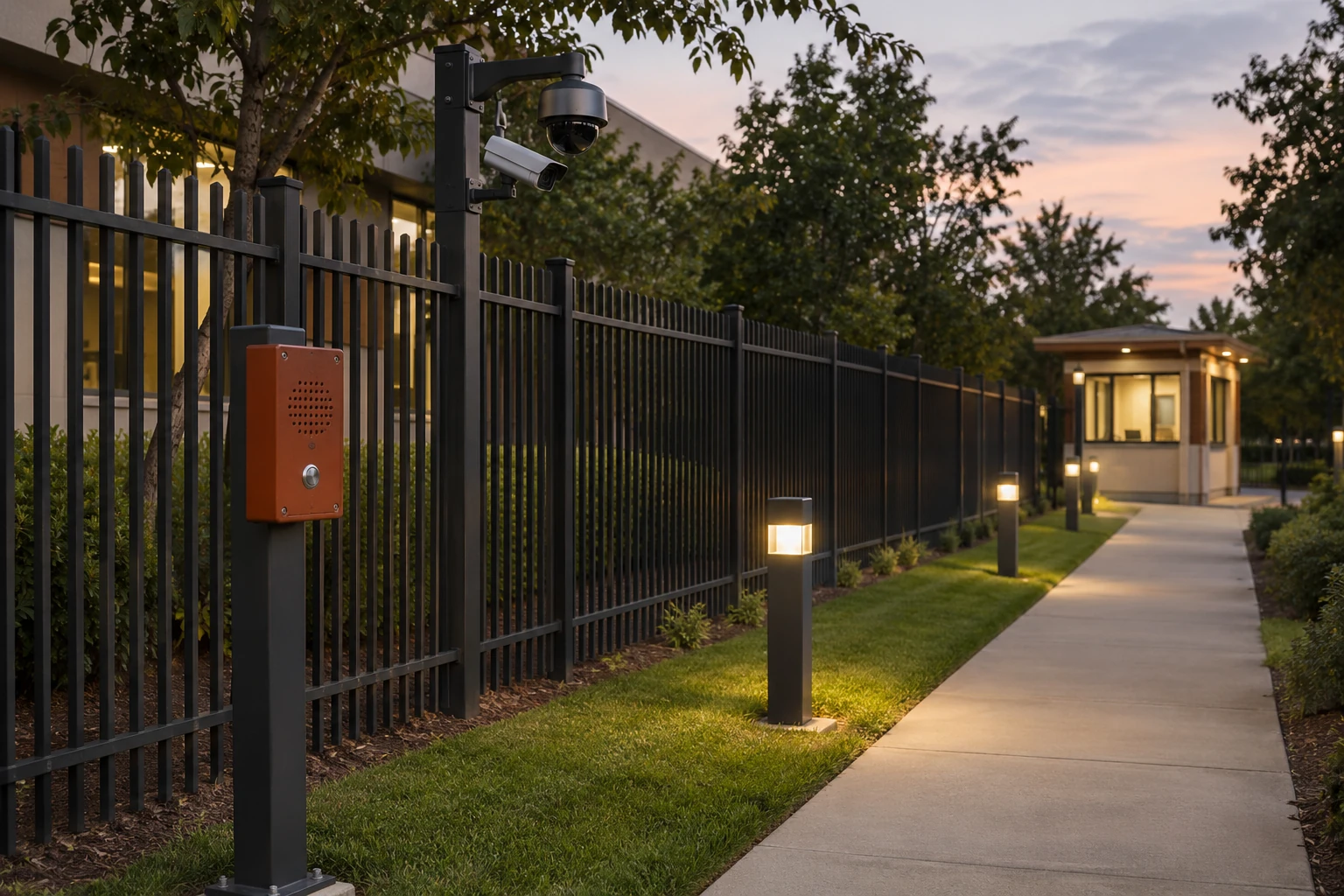
A posted officer is the strongest presence there is, but paying for one every hour of the week adds up quickly. Patrol is efficient, but a property is unwatched between stops. Cameras see a lot of ground at once, but they can’t walk over and try a door. Each service is good at something and weak at something else.
Combining them lets each one cover the hours and areas it handles best, and you don’t pay for coverage you don’t need.
Put a posted officer where people need to be met: a gate during receiving, a front desk during business hours, a shopping center at closing. Use patrol where the property needs checking but not greeting: a dark yard, a locked office, a vacant suite. Use live cameras where the ground is too big to see from one spot: trailer yards, long fence lines, wide parking lots.
Then let alarm response handle the moments a sensor catches something, so an officer checks it instead of you.
Sketch a normal day and a normal night on paper. Mark when the property is busy, when it empties and when it’s most exposed. Each block of hours gets a layer. A distribution building might have a gate officer from early morning until receiving closes, cameras watched from evening until dawn and patrol stops scattered through the night.
Weekends often look completely different, so plan them separately.
Mixing services shouldn’t mean juggling different paperwork. Every round, patrol stop and camera event goes into a timed log, and shift reports and incident photos come to you by email in the same format, whichever layer caught it. Reading the night’s activity takes a few minutes.
The first plan is a starting point. After a few weeks, the logs show where activity really happens and which hours stay quiet. Shift camera hours, add or trim patrol stops, or move an officer to a different part of the day. The plan can follow what the reports show.
Take a distribution building with a busy truck gate. From early morning until receiving closes, a gate officer signs in trucks and keeps visitors off the dock. From evening until dawn, cameras on the yard and gates are watched live. Through the night, a patrol vehicle stops in at unpredictable times to walk the trailer rows and try the doors, and heads straight to any spot the monitors flag.
On weekends, with no receiving, the gate post drops away and the cameras and patrol carry the whole property.
Alarms add a fourth layer that costs very little until it is needed. When a sensor trips, an officer is sent to check, often the same officer already running the patrol route. On properties without cameras, alarm response and patrol together cover most nights well.
Pick a recent night and ask three things. Who was on the property, and did anyone see them? Which part of the property went longest without being looked at? If something had happened at 3 a.m., who would have found out first?
Wherever the honest answer is nobody, or the morning crew, that is where the next layer belongs.
Start with the layer the property can’t do without, usually the posted officer during busy hours or patrol at night, then add the next layer where the gaps are biggest. The written quote after the free walkthrough shows each layer with its cost, so you can see exactly what each one buys.
Often it costs less, because the costliest layer only covers the hours that truly need it.
You do. The plan you set names the situations that send an officer and who gets called first.
Not at all. Many need only one or two, and the walkthrough shows where the gaps are.
Yes. You can remove a layer, or add one, whenever the reports suggest it.
Resources
Services
01 / Video
Someone watching your existing cameras live during the hours nobody is on site.
View details02 / Alarms
An officer heads to your property when the alarm sounds, so you don’t have to.
View details