01
Call with the details
Which system is down, which areas it serves and who meets the officer.

Fire watch in Watsonville
When a Watsonville building’s fire alarm or sprinkler system is out of service, a fire watch officer walks continuous rounds and keeps a timed log until it’s restored.
Request a quoteCall (831) 574-6164
Fire systems fail at the worst moments. A panel goes dark on a Friday evening, a sprinkler line in a cold storage building has to be drained for a repair, a contractor needs to weld inside a warehouse that’s still running. Until the system is back, someone has to do its job on foot.
A fire watch officer has that single job. They keep walking the affected areas, watch for smoke, heat and anything that could catch, keep exits and aisles clear and know how to raise the alarm and call for help. Each round goes into a timed log that stays on site for your contractor and anyone else who asks to see it.
Call us the moment you learn the system is impaired, and we’ll get coverage set up. Fire watch can cover one night or a weekend, or run around the clock until the repair is signed off. On jobsites with hot work, it runs next to your regular security.
Step by step
01
Which system is down, which areas it serves and who meets the officer.
02
We set rounds that pass through every affected area.
03
The officer keeps walking until the system is back in service.
04
The officer records the final round and gives you the timed log.
Before the first round, the officer walks the route with your contact and learns where the extinguishers, pull stations and exits are, which doors need keys or codes and who to call after 911. From then on, the job is the route: every affected room, aisle, stairwell and mechanical space on a steady loop, with hot-work areas watched closely while the work goes on and after it stops.
The route sets how often the officer passes a given spot. A small office suite might take ten minutes a loop, while a long building with rack aisles takes far longer. The log shows when each loop started and finished, so anyone reading it can see the pace held all night.
At a shift change, the incoming officer walks one loop with the outgoing one and both sign the log, so the record never has a gap. Anything corrected along the way, such as a blocked exit or cardboard stacked against a heater, is written down with the time.
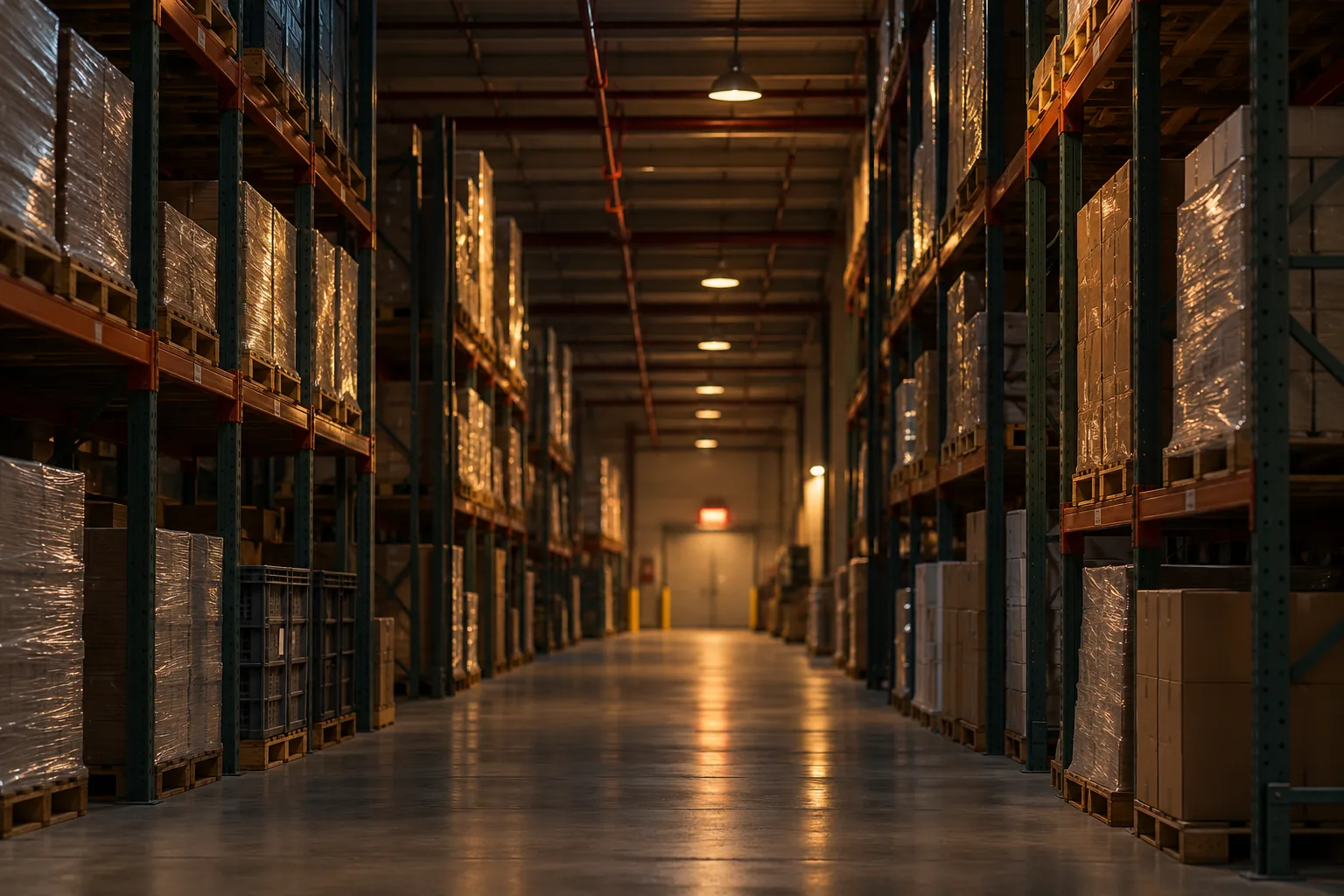
Here is what fire watch looks like in a Watsonville cold storage building. The officer starts at the dock, walks past the forklift charging stations, moves along the cooler doors and through the storage aisles the impaired sprinkler zone covers, then circles back. Each pass is written in the log with the time, and the next one starts straight away.
Nothing about the plant’s own work has to stop. Crews keep working, trucks keep loading, and the officer stays out of their way while keeping the route moving.
If the property already has a gate officer or overnight patrol, that coverage carries on as usual. The fire watch officer is an extra person with a single job, so neither role gets in the way of the other.
Once your contractor restores the system and it is signed off, the watch ends and the log is handed over. Your regular officers carry on exactly as before.
Fire watch is billed by the officer-hour, and the hours run until your system is back in service. In 2026, most fire watch in Watsonville costs $40 to $59 an hour, by published rates for the region. A single small area can start near $35, and a large or same-evening watch can reach about $80.
Say a sprinkler line in a cold storage building has to be drained on a Friday evening and the repair parts arrive Tuesday morning. Covering the affected areas from 6 p.m. Friday to 8 a.m. Tuesday is 86 hours. At $48 an hour, that’s about $4,128. If the system is out for weeks rather than days, the watch becomes a 24-hour post (about 730 hours a month) until it’s restored.
The size of the affected area matters most. One officer can walk a small building; a large warehouse or a whole complex needs more than one to keep the rounds tight. A watch that has to start the same evening, weekend and holiday hours, and long nights in a cold building all raise the rate toward $80. Hot-work watches for a contractor’s welding usually run shorter and cost less overall. When there’s time, we set the rounds and the log at a free walkthrough, and the written quote covers as many days as the repair takes.
Your fire protection contractor or the local fire authority will tell you, usually when an alarm or sprinkler system is impaired or hot work is planned.
Phone us the moment you learn the system is out, with which system it is, the areas it serves, your contractor’s number and who lets the officer in. With those answers, the route and the first officer get set on that one call.
The time of every round, the areas walked and anything the officer noticed along the way.
Yes. It keeps going, nights and weekends included, until the system is restored.
A fire watch can often start within 24 hours of your call, with the route already drawn around the areas the impaired system protects.
When your fire protection contractor and the local fire authority sign off on the repair. We record the final round and hand you the log.
Yes. The route covers only the areas the impaired system protects, and the log names each one. Our fire system guide explains the rounds in more detail.
It puts an officer in the place of a fire alarm or sprinkler system that’s out of service. The officer walks the areas that system protects on a continuous loop, ready to raise the alarm and call for help, until it’s working again. A fire watch is also common during welding, cutting and other hot work.
Related services
01 / Construction
Gate check-in by day, and guards, patrol or cameras after the crews go home.
View details02 / Short notice
Officers for a night, a week or a season, with no long contract.
View details03 / On-site
A uniformed officer stationed at your Watsonville property for the shifts you choose.
View detailsIndustries
01 / Industry
A familiar officer at the front desk by day and careful rounds after everyone leaves.
View details02 / Industry
Truck gate logs, dock door checks and trailer-yard rounds for distribution buildings.
View details03 / Industry
Night patrols, amenity checks and gate posts for Watsonville communities.
View detailsResources