
Industries
Laboratory security in Watsonville
Laboratory security for Watsonville agricultural, food and testing labs, with a log of who dropped off each shipment and who was called when a freezer alarm sounded: officers log couriers, sign in visitors and check the doors after hours.
Request a quoteCall (831) 574-6164
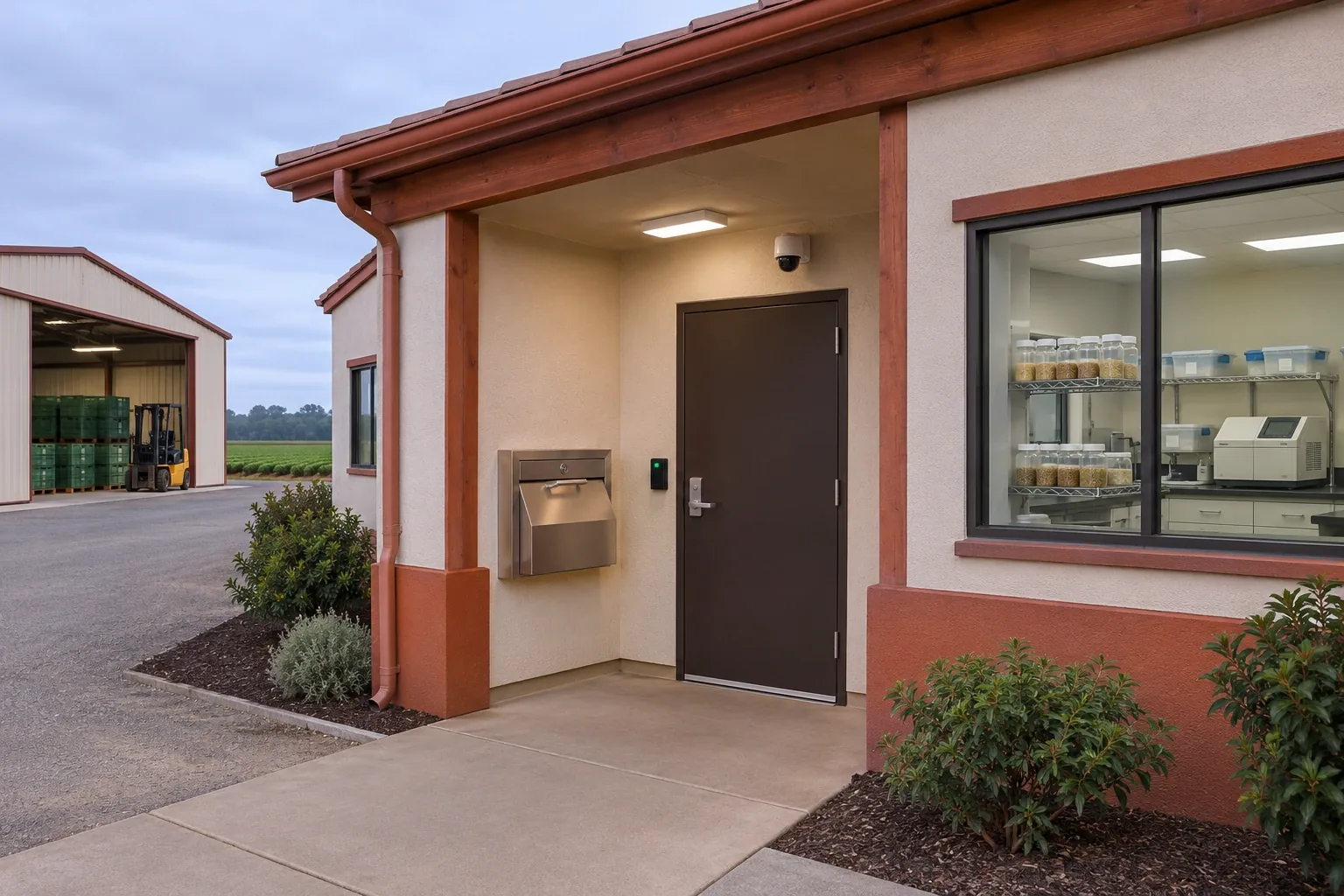
Security for Watsonville testing labs
A testing lab needs security that knows where the officer’s job ends and the lab’s begins. Our officers cover the building: the front door, the lobby and visitor sign-in, the receiving door where couriers and sample coolers arrive, and patrols and door checks after the staff go home. They answer freezer and equipment alarms the way your lab staff set out, and they stay out of restricted lab space unless your own plan puts them there.
That fits food safety, agricultural and quality testing labs, whether the lab fills a building or a suite inside a larger plant or office.
Couriers, coolers and the receiving door
Testing labs live on deliveries: coolers of samples from fields and packing sheds, overnight parcels, supply trucks and the pickups that carry results and retained samples back out. The receiving officer checks each courier against the expected list, writes down the company, name, time and box count, and calls your lab contact to take the samples in hand. Samples pass straight from the courier to your staff, and coolers stay closed at the door.
Late drop-offs after the lab closes follow a routine you set: a locked drop point, a call to the person on duty, or a hold at the desk until morning. Outgoing shipments get the same log entry, so you can trace a box from the door in either direction. The cold storage guide shows how an arrival list speeds up a busy door.
Freezer and equipment alarm routines
A freezer that warms overnight puts stored samples at risk, and the alarm can sound when nobody from the lab is in the building. We write the routine with your staff before the first shift:
| Step | What the officer does |
|---|---|
| Alarm sounds or the panel shows a fault | Notes the unit, the time and what the display reads |
| First check | Looks from the doorway or corridor your plan allows for an open door, a tripped breaker or a power loss in the area |
| Call tree | Calls the first lab contact on your list, then the next, until someone answers |
| While waiting | Stays near the area, keeps others out and lets the responding staff member in |
| Afterward | Writes up who was called, when they arrived and what they found |
The officer records the alarm and calls your lab’s on-call contacts, and samples, units and equipment stay in your staff’s hands. Building alarms outside lab hours can also go to our alarm response team.
Visitors and escorts in non-regulated areas
Auditors, clients, contractors and job candidates all come through the lobby. The officer signs each one in, confirms the host, hands out a visitor badge and walks them to the meeting room or office area your plan names. Escorts stay in the non-regulated parts of the building. Cleaning and maintenance crews who work after hours sign in the same way, and the log shows who was in the building and when.
After-hours patrols and tailgating
At night, the officer tries the exterior doors, checks the receiving door and any outside storage, looks at the lab doors from the corridor and notes any badge reader that fails to lock. During the day, the officer watches for tailgating at the badge doors, where someone follows a valid badge through, and asks that person to badge in or sign in at the desk. Patrol stops at changing times can carry a smaller lab through the night, and live camera monitoring can watch the doors between them.
Emergencies and EH&S
In an emergency, people come first. Work out with your EH&S lead in advance how the officer meets fire crews at the door, which keys or badges responders get, who holds the hazard information and where staff gather after an evacuation. The officer keeps that contact list and the floor plan at the post.
Start with a walk of the building
A good lab plan comes from walking the building with your lab manager and EH&S lead: the doors, the receiving area, the freezers and the hours samples arrive. That walkthrough is free, and you get a written quote on a month-to-month contract. Request a quote to set a time.
Common questions
Can an officer sign in couriers when the lab is closed?
Yes. The officer logs each courier and box, then follows your after-hours rule: a locked drop point, a call to the on-duty staff member or a hold at the desk.
What does the officer do when a freezer alarm goes off at night?
The officer notes the unit and time, checks what your plan allows from the corridor, and works down your call list until a lab staff member answers and comes in.
Will officers go into the lab rooms?
Only where your written plan sends them. Rounds can stay in corridors, the lobby and receiving, with any lab-room checks set by your staff.
Can you escort visitors and contractors?
Yes. Visitors are signed in, badged and walked to the areas your plan names, and after-hours contractors are logged in and out.
Can coverage run only nights and weekends?
Yes. Coverage can be limited to the hours staff are away, and patrol stops or a posted officer can cover those hours on a month-to-month contract.